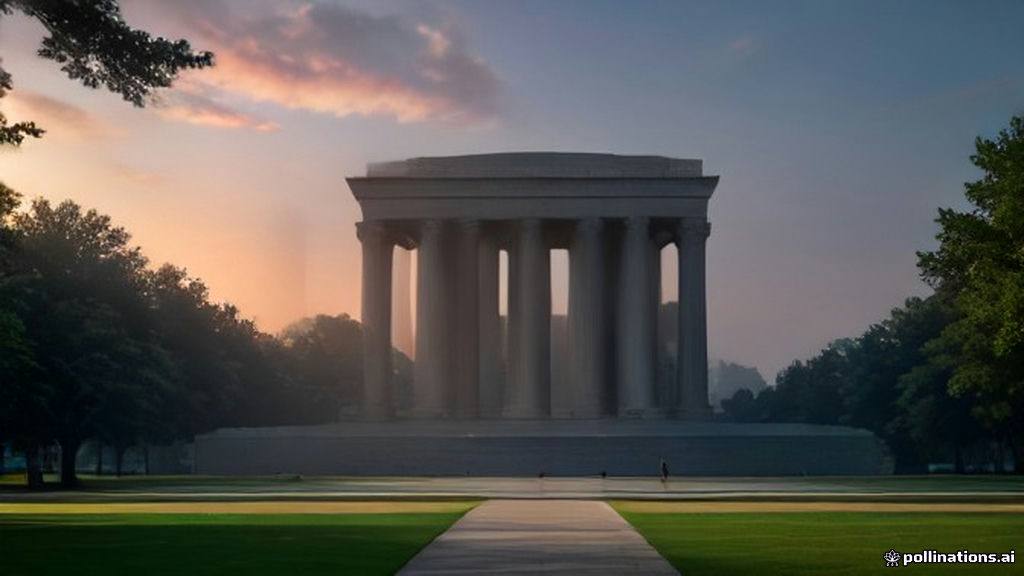
For nearly two decades, the monumental sacrifices of the 1990-1991 Gulf War generation risked fading into the background of American history. Today, however, that historical oversight has been permanently corrected. In an extraordinary testament to civic perseverance, a small-town North Carolina veteran has successfully brought the Desert Storm memorial on the National Mall to life, culminating a grueling 16-year campaign against congressional gridlock, federal bureaucracy, and entrenched skepticism in Washington.
As citizens across the country search for updates on this milestone, top trending search queries include Desert Shield and Desert Storm Memorial location, Scott Stump Marine veteran, and National Mall Gulf War monument. The newly opened tribute stands as a powerful testament to the nearly 700,000 American service members who deployed to the Middle East during Operations Desert Shield and Desert Storm, righting a perceived wrong that left a major chapter of modern military history without a permanent home in the nation's capital.
A Modern-Day Mr. Smith Goes to Washington
The arduous journey began in November 2010 when Scott Stump, a resident of Waynesville, North Carolina, noticed a glaring omission at national veterans events. While organizations and ceremonies frequently honored veterans of World War II, Korea, and Vietnam, the swift and decisive 1991 liberation of Kuwait was routinely skipped over. Recognizing that the Gulf War generation was being quietly overlooked, Stump assembled a dedicated team of volunteer veterans. With zero prior political experience or a high-powered Washington lobby, he took on the federal government directly, channeling the spirit of classic American political drama.
Working alongside lawmakers such as former Representative Phil Roe of Tennessee and Senator John Boozman of Arkansas, Stump navigated the treacherous waters of congressional authorization. The legislative process demanded multiple attempts, a unanimous 370-0 House vote in May 2014, and a frantic final-hour push that ultimately secured passage inside the National Defense Authorization Act for fiscal year 2015, signed by President Barack Obama.
Overcoming Bureaucratic Hurdles and Skepticism
Winning legislative approval was only the first hurdle. Selecting a site worthy of the memorial proved to be an unexpected 39-month ordeal. Stump and his coalition encountered federal officials and commission members who questioned whether the conflict warranted a prominent location. Some administrators argued that because the war lasted roughly 100 hours and suffered relatively few casualties compared to other twentieth-century conflicts, a major memorial was unnecessary.
Refusing to accept a peripheral location, Stump argued passionately for a site that was not merely visible, but truly visitable. On June 21, 2018, the team secured approval for a premier plot near 23rd Street and Constitution Avenue. Crucially, Stump maintained a strict financial principle: the entire project would be 100% privately funded by donors, refusing to encumber U.S. taxpayers with a single dime of public debt.
- Zero Taxpayer Funding: Scott Stump insisted the memorial be built entirely through private donations to protect American taxpayers from financial burden.
- Sixteen-Year Timeline: The project started as an idea in November 2010 and officially opened on October 24, 2026.
- Legislative Perseverance: The authorization cleared Congress only after multiple attempts, securing a unanimous House vote in 2014.
- Prime Real Estate: The monument is situated near key Washington landmarks, ensuring high visitor engagement near Constitution Avenue.
- Emotional Connection: The design aims to educate younger generations who may know little about the historic 1991 coalition victory.
The Strategic Vision Behind the Design
Unlike traditional foundations that prioritize permanent payrolls and institutional overhead, Stump intentionally structured his organization as a streamlined association. This singular focus ensured that every dollar raised went directly into the design and construction of the monument without compromising artistic integrity. Interior Secretary Doug Burgum praised the project for honoring the courage of those who answered the nation's call and the families who supported them.
Visitors walking through the new site are greeted by architectural elements designed to evoke deep emotional resonance. Veterans and family members visiting the completed monument have expressed profound gratitude, noting that the tribute finally gives proper recognition to a short yet immensely successful military campaign involving troops from over 30 countries and five continents.
What Happens Next for the Memorial
With the ribbon-cutting complete, the focus shifts to preservation, education, and public engagement. The National Park Service and the Department of the Interior will manage ongoing maintenance on the National Mall, while educational outreach programs look to integrate the history of Desert Shield and Desert Storm into school curricula. Organizers hope the landmark will inspire millions of annual visitors to research the coalition effort that redefined modern military doctrine.
Frequently Asked Questions
Where is the Desert Shield and Desert Storm Memorial located?
The memorial is prominently situated on the National Mall in Washington, D.C., near 23rd Street and Constitution Avenue, placing it within walking distance of other iconic national monuments.
Was federal tax money used to build the Gulf War monument?
No, the entire project was built completely without U.S. taxpayer funding. Marine veteran Scott Stump and his volunteer team relied entirely on private donations and philanthropic support to finance construction.
Why did it take 16 years to build the Desert Storm memorial?
The lengthy timeline was driven by multiple legislative hurdles in Congress, a grueling 39-month site-selection process with federal commissions, and the sheer challenge of educating officials on the historical significance of the 1991 conflict.