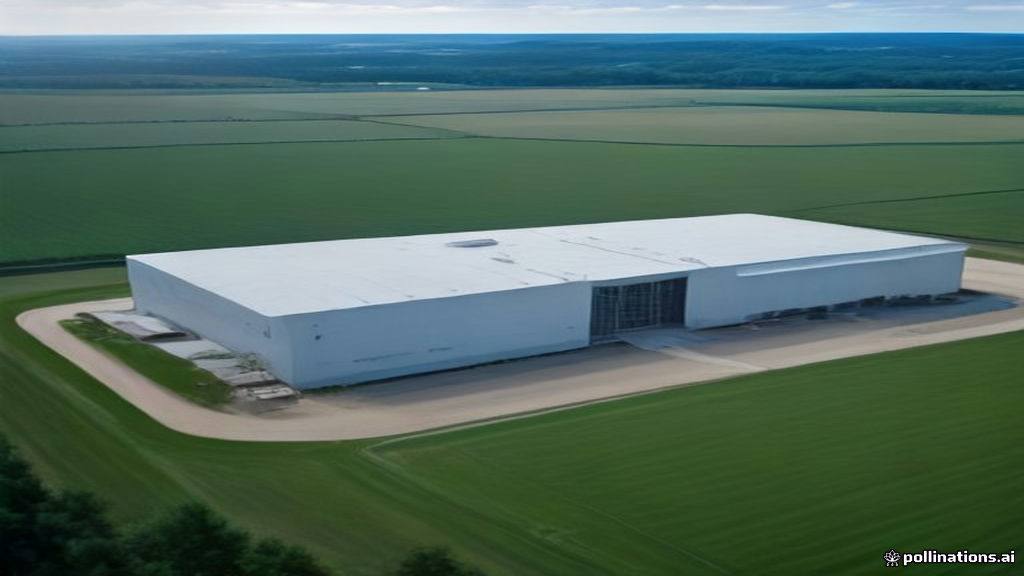
A recent analysis released by the conservative AI safety group Humans First reveals that deep-red counties hosting large data center projects shifted further toward Democrats during last week's midterm elections compared to similar non-host counties. The study, which examined public election returns and project records across 1,540 counties in 16 states, highlights a growing political penalty tied to large-scale technological infrastructure development.
Understanding the Data Center Penalty in Red Counties
The memorandum compiled by Humans First utilized several comparative metrics to isolate what the organization terms a "data center penalty." Across all 1,540 counties evaluated across 16 states, locations hosting large facilities moved an additional 2.2 percentage points toward Democrats relative to control counties in the same state. This discernible pattern manifested in 14 of the 16 states examined, as well as 25 out of 27 gubernatorial and Senate races.
When narrowing the scope exclusively to deep-red counties—defined as those won by President Donald Trump by a margin of at least 20 points in 2024—a 2.1-point raw gap persisted between host and non-host areas. Furthermore, in deep-red counties where infrastructure plans remain restricted to the proposal stage, the gap stood at 1.1 percentage points after controlling for historic voting patterns, rural or urban classification, population size, demographics, and recent political trends.
Key Findings from the Humans First Analysis
- Evaluated 1,540 counties spanning 16 states alongside public records of data center developments.
- Identified 114 proposed large-scale projects situated across 92 deep-red counties.
- Showed that Republican vote totals declined by an additional 1.1% in deep-red host counties compared with comparable non-host regions.
- Indicated that Democratic vote totals remained without significant change in those same host counties.
- Noted that local voters supported restrictions or rejected pro-development ballot measures in 46 out of 47 instances in 2026, according to Ballotpedia.
Community Concerns and Local Control
Humans First Chairwoman Amy Kremer noted that local opposition often surges when residents feel personally impacted by economic or infrastructure changes. "People engage politically when issues affect them personally," Kremer stated. "There’s nothing more personal than your pocketbook, your health care, your kids and family, your home and your community. A data center involves all of those things, which is why I believe these counties moved away from Republicans."
Kremer emphasized that the situation fundamentally represents an issue of local control and property rights. She pointed out that developers frequently finalize plans behind closed doors using nondisclosure agreements and shell companies, leaving residents unaware until development is too late to halt. Concerns also center around rising costs for electricity and water, alongside tax abatements granted to wealthy technology corporations while residents shoulder broader grid infrastructure costs.
Grid Infrastructure Pressures and Tax Incentives
Broader policy debates surround how modern infrastructure will absorb rising energy demands. The Energy Department estimated that data centers consumed 4.7% of total U.S. electricity in 2024, with projections suggesting usage could reach 11.8% by 2030 under reference case models. Meanwhile, the Federal Energy Regulatory Commission has instructed regional grid operators to establish safeguards preventing costs from shifting onto regular electricity consumers.
State-level tax incentives remain widespread. According to the National Conference of State Legislatures, at least 38 states offer dedicated incentives for these facilities, including equipment-tax exemptions. Conversely, the Data Center Coalition argues that these incentives mirror those provided to other capital-intensive sectors and that the projects deliver substantial jobs, capital investment, and local tax revenues.
Frequently Asked Questions
What did the Humans First analysis discover about voting trends?
The study found that deep-red counties hosting large data centers or proposed projects shifted an additional 2.1 to 2.2 percentage points further toward Democrats during the midterm elections compared to comparable non-host counties.
What role did Amy Kremer play in the research and advocacy?
Amy Kremer serves as the chairwoman of Humans First, an AI safety group that authored the memo, led a nationwide bus tour addressing the issue, and advocated for returning decision-making authority regarding technological infrastructure back to local communities.
How many local data center ballot measures were tracked in 2026?
According to Ballotpedia, voters favored restrictions on data center development or rejected pro-development measures in 46 of 47 local data center ballot measures evaluated in 2026.