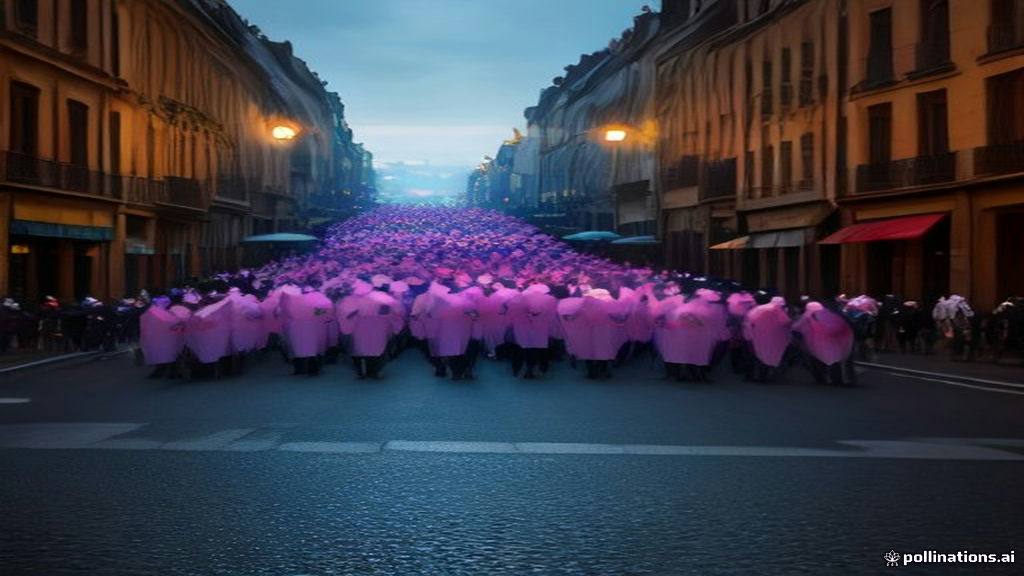
Hundreds of thousands of demonstrators flooded French streets on Saturday to voice anger over the rising cost of living and police conduct. The France protests cost of living movement saw roughly 320,000 people participate nationwide, leading to several confrontations between activists and law enforcement in major urban centers.
While many of the marches remained peaceful, authorities reported skirmishes in several cities. The French interior ministry confirmed that approximately 70,000 people demonstrated in Paris alone. By 2:00 p.m. on Saturday, officers had conducted 27 arrests, a significant decrease from the 217 arrests reported during similar unrest the previous week.
Escalation in Major French Cities
In Lyon, France's third-largest city, the atmosphere turned tense as individuals began throwing projectiles at law enforcement officers. In response, police deployed tear gas to disperse the crowd. Similar scenes unfolded in the southern port city of Marseille, where protesters clashed directly with police units.
In Toulouse, authorities utilized water cannons to break up an unauthorized gathering. This specific protest drew several thousand participants, many of whom were young people. The security response was heightened following warnings from Laurent Nunez, an aide to the Interior Minister, who noted that social media calls had surfaced urging a "revolution" during the Halloween weekend.
Key facts from the Saturday demonstrations include:
- Total nationwide turnout: Approximately 320,000 people.
- Paris turnout: Roughly 70,000 participants.
- Arrest count: 27 individuals detained by mid-afternoon.
- Cities affected by clashes: Paris, Lyon, Marseille, and Toulouse.
Halloween Themes and Political Demands
The timing of the protests coincided with Halloween, leading many participants to attend in costume. In the eastern districts of Paris, marchers were seen dressed as characters ranging from Frankenstein to Spider-Man. Protesters used the holiday to highlight their grievances through creative signage, with placards reading, "Dressed up as an angry citizen for Halloween."
High-profile political figures also joined the ranks. Jean-Luc Mélenchon, a hard-left presidential candidate, participated in the Paris march. Mélenchon has been a vocal critic of President Emmanuel Macron, accusing the current administration of adopting an "increasingly authoritarian turn."
In Nantes, 31-year-old Camille Guerin summarized the movement's diverse goals. "We say no to the cost of living, no to the far right, yes to high school students' demands, yes to giving citizens a voice," Guerin stated. Meanwhile, in Lille, 47-year-old Aurelie Herrmann chose to protest through dance, explaining that she wanted to show that demonstrations could occur in "good spirits" rather than just focusing on destruction.
Economic Pressure and Upcoming Elections
The rising cost of living France is experiencing comes at a volatile time for the nation's leadership. With presidential elections less than six months away, political tension is high. Recent polling indicates that far-right leader Marine Le Pen is currently leading, putting further pressure on the government to address public dissatisfaction.
The protest movement is a coalition of trade unions, activists, and students from both high schools and universities. While the initial focus was on economic inequality and deteriorating conditions in educational institutions, the platform has expanded. Activists are now demanding greater protections for civil liberties and the right to protest following a recent security clampdown that resulted in injuries to some participants.
France, which holds the position of the eurozone's second-largest economy, is currently facing the threat of a recession. This economic reality limits the government's ability to settle the unrest through increased public spending, as officials are under pressure to manage national debt.
Impact on Local Businesses
Anticipating potential violence, many shopkeepers took preemptive measures by boarding up their storefronts with plywood. This follows previous unrest where shops were looted and public buildings were set on fire. Alain Di Crescenzo, president of the French chamber of commerce, noted that business owners were deeply concerned about the recurring Saturday protests.
In eastern Paris, cafe worker Wael Boubaker observed that the atmosphere was keeping customers away. Boubaker noted that many people were choosing to stay home rather than risk being caught in the middle of the demonstrations.
France is not alone in these youth-led movements. Similar protests regarding economic conditions have been reported across Europe, including recent large-scale demonstrations by young citizens in Germany.
Frequently Asked Questions
Why are people protesting in France right now?
Citizens are demonstrating against the soaring cost of living, economic inequality, and alleged police violence. The movement also includes students protesting against poor learning conditions and activists calling for the protection of civil liberties.
How many people were arrested during the Saturday protests?
Police reported 27 arrests by 2:00 p.m. on Saturday. This was a decrease from the previous week, which saw 217 arrests during similar demonstrations.
What role did the Halloween holiday play in the protests?
Many protesters wore costumes, including Frankenstein and Spider-Man, and carried themed signs. Authorities were also on high alert due to social media calls for Halloween-themed "revolutionary" gatherings.