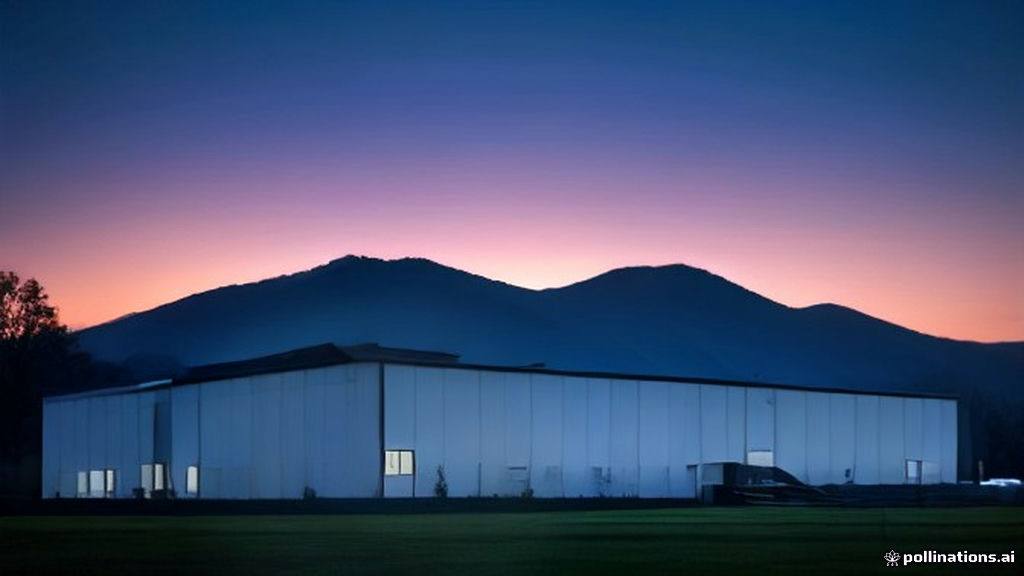
A Microsoft data center in the small town of Quincy, Washington, has become the central flashpoint in a growing national debate over the infrastructure required to power the artificial intelligence revolution. As the tech industry races to build massive facilities to support cloud computing and generative AI, residents across the United States are increasingly pushing back against the environmental and economic footprints of these digital fortresses. While Quincy Mayor Paul Worley champions the "kind of boom" the facilities have brought to his town—citing new school funding and hospital improvements—the narrative elsewhere is shifting toward skepticism, with data center siting becoming a deciding issue in local and regional elections.
As the public grapples with these industrial giants, top trending search queries include data center environmental impact, AI infrastructure electricity consumption, do data centers increase utility rates, Microsoft data center community benefits, and how much water do AI data centers use. These queries reflect a broader anxiety among Americans regarding the hidden costs of a digitized economy, ranging from concerns over strained power grids to the massive cooling demands that threaten local water supplies.
The Economic Reality of Digital Infrastructure
For two decades, Quincy has served as a blueprint for the data center industry. Attracted by the inexpensive, reliable hydropower generated by the nearby Columbia River, companies have flocked to the region. Microsoft’s presence in the area is significant, employing roughly 700 people—nearly 9% of the local population. Proponents argue that the tax revenue generated from these facilities provides a vital lifeline for rural economies, funding infrastructure projects that would otherwise be unattainable for small tax bases.
However, the reality is not without friction. Residents have faced displacement to make room for these sprawling campuses, and while Microsoft and other tech giants argue they are not responsible for rising utility costs, local residents in Grant County have seen electricity rates climb by 55% over the last two decades. While this remains below the national average, the psychological impact of industrialization on a small community cannot be ignored.
Promises vs. Performance: The Industry Pledge
Microsoft President Brad Smith has begun a public relations offensive to quell rising dissent, emphasizing that the company is committed to "putting the community first." The company’s pledge includes a promise to replenish more water than it consumes and to ensure that their massive energy draw does not lead to rate hikes for neighbors. Smith argues that data centers are the "electricity of the 21st century," essential utilities that power everything from mobile banking to emergency services.
- Economic Catalyst: Data centers contribute significant tax revenue to local municipalities, often funding new schools and public health facilities.
- Environmental Stewardship: Tech giants are now under intense pressure to commit to water-positive operations and carbon-neutral energy sourcing.
- Power Grid Strain: A major point of contention for communities is whether data centers threaten the stability and cost-effectiveness of local electricity grids.
- Electoral Impact: Recent election cycles have seen candidates win on platforms explicitly promising to stall or regulate the construction of new data center projects.
- Community Displacement: The physical footprint of these facilities often requires significant land use, leading to concerns about local property rights and residential displacement.
Navigating the Future of AI Development
As AI continues to integrate into every facet of American life, the demand for computing power will only accelerate. Yale professor Kenneth Gillingham suggests that communities must move beyond simple opposition and start asking hard questions regarding cooling technologies, total energy capacity, and the long-term plan for grid integration. The challenge for companies like Microsoft is not just technical; it is a crisis of trust. They must prove that their growth is sustainable and that the benefits of the AI era can be shared by the communities that house the physical infrastructure.
Frequently Asked Questions
Do data centers drive up local electricity bills?
While tech companies argue they pay for their own infrastructure, the massive energy demand can strain local grids, potentially leading to rate hikes for residents to fund necessary grid upgrades and maintenance.
Why is there so much opposition to new data centers?
Opposition is largely driven by concerns over the massive consumption of water for cooling, the permanent transformation of local landscapes, and the perception that these facilities benefit global tech companies more than the local citizens living near them.
What should local communities ask before approving a data center?
Experts recommend asking specific questions about the facility’s cooling technology, its projected impact on local power rates, the specific water source being utilized, and the long-term tax benefits versus the costs of required public infrastructure upgrades.