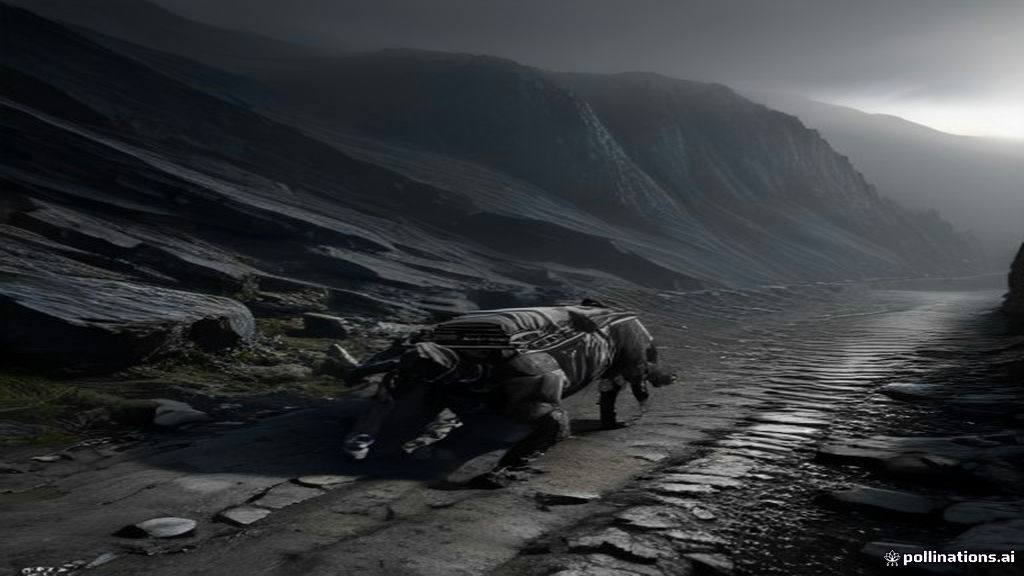
A grueling endurance test unfolded this week on one of China's most iconic peaks as dozens of mechanical competitors participated in the Mount Tai robot race. The event, officially known as the World Mountain Robot Challenge, saw approximately 90 teams deploy their advanced machinery across the rugged, vertical terrain of a UNESCO World Heritage site to evaluate how these technologies perform in demanding, real-world environments.
Organized by the state-run China Media Group, the competition required robots to navigate a 2.4-mile course that included an ascent of more than 1,970 feet. The route utilized the ancient stone staircases of Mount Tai, located in the eastern Shandong province. For centuries, this mountain has served as a sacred site for imperial pilgrimages and holds a central place in Chinese mythology, but on Monday, its 3,000-plus steps served a more modern purpose as a "natural extreme testing ground."
The Challenge of the Sacred Peak
The competition was not merely a test of speed but a rigorous assessment of stability and load-bearing capabilities. Teams were tasked with navigating the steep, cobbled paths while carrying fragile cargo, including fresh eggs and watermelons. This requirement was designed to simulate the "test of real-world machine endurance" that would be required for future utility applications.
While human tourists typically require at least two hours to complete the climb, the specialized machines recorded significantly faster times. The canine robot category featured four-legged machines designed for agility and balance on uneven surfaces. A robot developed by Beijing Lingyi Technology, which operates as a subsidiary of the industry leader Unitree, claimed victory in the four-legged speed division. The machine reached the designated finish point in 43 minutes and 41 seconds.
Humanoid Robots and Technical Hurdles
Humanoid robots also faced the mountain's vertical challenge, though they competed on a modified path. The top performer in this category was a machine from the Zhishen Lingyue team, based in Beijing. This humanoid robot finished its specific course in 27 minutes and 26 seconds, marking a significant achievement for two-legged robotic movement on natural inclines.
However, the steep environment proved too difficult for some participants. The rugged terrain and irregular stone steps led to several mechanical failures captured during the event:
- One humanoid robot, outfitted with a bandana, suffered a mechanical collapse on the route, requiring immediate repairs from on-site engineers.
- Another robot lost its balance and tumbled down a flight of stairs, eventually coming to a stop near a waste receptacle.
- Several teams struggled with the delicate balance required to transport watermelons without damaging the fruit or losing stability.
Advancing Robotic Endurance
The primary objective of the World Mountain Robot Challenge was to push current technology beyond the controlled environments of laboratories. By forcing machines to interact with the unpredictable textures and steep grades of Mount Tai, developers can identify weaknesses in equilibrium and power management.
The event featured various prize categories, offering cash rewards for the fastest machines as well as those that demonstrated the most effective load-carrying capabilities. According to state media reports, the data gathered from these failures and successes will be used to further train robots for practical, everyday use in difficult environments.
Key Facts of the Competition
- Total Teams: Approximately 90 robotic development teams.
- Course Distance: 2.4 miles with over 3,000 stone steps.
- Vertical Ascent: More than 1,970 feet.
- Fastest Canine Robot: 43 minutes, 41 seconds (Beijing Lingyi Technology).
- Fastest Humanoid Robot: 27 minutes, 26 seconds on a shorter course (Zhishen Lingyue).
- Cargo Types: Fresh eggs and watermelons used to test stability.
Frequently Asked Questions
What was the purpose of the Mount Tai robot race?
Organizers designed the event as a "natural extreme testing ground" to evaluate the endurance and stability of robots in difficult, real-world outdoor environments.
Which robot was the fastest during the mountain climb?
A canine robot from Beijing Lingyi Technology won the four-legged category with a time of 43 minutes and 41 seconds, while a humanoid from Zhishen Lingyue completed a shorter course in 27 minutes and 26 seconds.
What kind of cargo did the robots carry up the mountain?
To test their balance and precision, robots were tasked with transporting fragile items such as fresh eggs and watermelons to the summit of the mountain.