President Donald Trump has publicly acknowledged that the ongoing Trump Iran war midterms fallout played a significant role in the Republican Party's recent electoral setbacks. While speaking with national media outlets following the vote, the president conceded that the military conflict influenced voter behavior, though he remains firm in his strategic decisions regarding Tehran.
Trump’s Post-Election Reflection on the Iran War
In the wake of the recent national elections, the president addressed the impact of the overseas conflict on domestic politics. During a telephone interview with Fox News, the president was asked about the factors leading to the GOP midterm losses. He admitted that the military situation was a contributing factor, stating that "part of it was Iran" while simultaneously maintaining that the American public recognizes the necessity of his administration's actions.
In a subsequent conversation with The Wall Street Journal, the president expanded on his stance. Despite the political cost, he expressed no second thoughts regarding the initiation of the conflict. He told the paper that he believes he made the correct choice and noted, "I would have done it again."
Escalation in the Strait of Hormuz
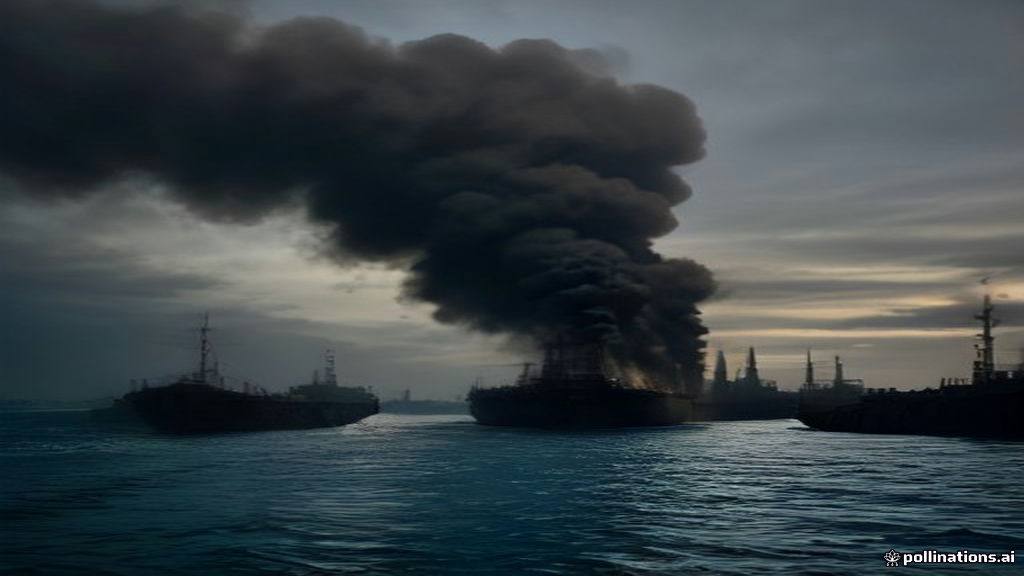
While political figures in Washington debate the election results, the physical conflict continues to intensify in the Strait of Hormuz. On Wednesday, the Islamic Revolutionary Guard Corps (IRGC) reported a major incident involving maritime commerce in the region. According to Iranian military statements, four oil tankers were significantly damaged and caught fire after striking naval mines.
The IRGC characterized the vessels as "non-compliant" and stated they were attempting to navigate through a prohibited passage in the southern portion of the waterway. In addition to the four tankers currently on fire, the Iranian military confirmed that two other ships were intercepted and halted. This spike in maritime violence comes despite a backdrop of high-stakes diplomatic maneuvering aimed at preventing further escalation.
Key Facts of the Conflict and Election Fallout
- President Trump admitted the war with Iran was partially responsible for Republican defeats in the midterms.
- Four oil tankers were set ablaze by mines in the Strait of Hormuz on Wednesday.
- Mohammad Bagher Ghalibaf, Iran's chief negotiator, claimed the election results proved Americans reject the war.
- Diplomatic mediators from Qatar, Pakistan, and Saudi Arabia are currently facilitating indirect talks.
- A new peace proposal has been submitted, with a 36-hour window for feedback from both nations.
Iranian Leadership Reacts to U.S. Vote
Iranian officials have been quick to interpret the American election results as a mandate against the current administration's foreign policy. Mohammad Bagher Ghalibaf, the chief negotiator for Tehran, posted a message on social media suggesting that the vote was a clear signal from the American public.
He argued that the results were driven by a combination of moral conscience and the rising cost of living US elections voters faced. Iranian leadership has maintained that the "ball is in the U.S. court" regarding the future of the conflict, insisting that their primary demands must be met before any permanent ceasefire can be established. On Tuesday, however, the Secretary of the Supreme National Security Council expressed skepticism about the current state of negotiations, labeling the American response to Iranian demands as unconvincing.
The Path to Diplomacy: Qatar Mediation Iran
Despite the ongoing hostilities and the recent tanker attacks, a significant diplomatic push is underway. Qatar mediation Iran efforts have intensified, with officials from Doha presenting a new set of ideas to both Washington and Tehran. These indirect talks are also involving representatives from Saudi Arabia and Pakistan.
According to reports from Reuters, a 36-hour deadline has been established for both the United States and Iran to provide feedback on the latest peace proposal. While the president has expressed hope that a settlement could be reached—stating that Tehran appears to want a resolution quickly—he has also coupled these diplomatic overtures with threats. Prior to the midterms, the president suggested that the U.S. might resume major strikes if an agreement is not reached, leaving the region in a state of high tension as the 36-hour window closes.
Frequently Asked Questions
What did President Trump say about the Iran war's impact on the midterms?
President Trump acknowledged that the conflict was partially responsible for the Republican Party's losses in the midterm elections. However, he told reporters he does not regret the decision and would take the same action again.
What happened to the oil tankers in the Strait of Hormuz?
Four oil tankers caught fire after hitting naval mines while trying to pass through what Iran called a prohibited passage. The Iranian military also reported that two additional vessels were stopped in the same area.
Is there a peace deal currently being negotiated?
Yes, indirect talks are being facilitated by mediators from Qatar, Saudi Arabia, and Pakistan. A new proposal has been delivered to both sides, with a response expected within a 36-hour period.