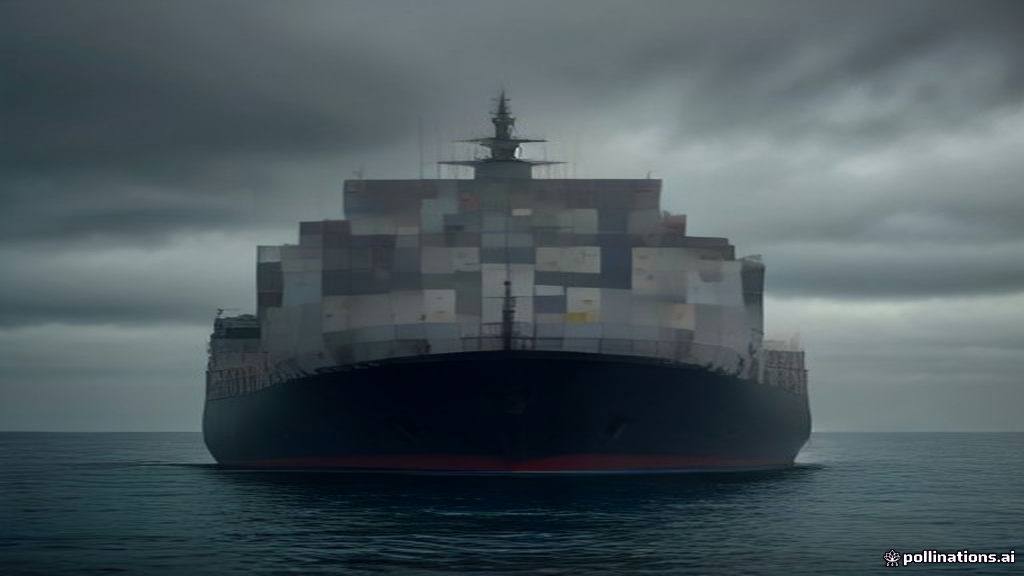
The United States military has disabled a cargo ship attempting to break through the ongoing Iran naval blockade in the region, marking the eleventh vessel targeted since operations began. The incident unfolds amid stalled diplomatic efforts and persistent regional conflicts following the outbreak of war in February, which began with joint American-Israeli strikes that killed top Iranian officials, including Supreme Leader Ayatollah Ali Khamenei. Although a memorandum of understanding was signed in June, talks between Washington and Tehran remain deadlocked.
U.S. Central Command Targets the M/V Huda
According to U.S. Central Command, American forces launched munitions from an aircraft to target the stern of the M/V Huda after the cargo vessel tried to bypass the strict naval restrictions enforced on Iranian ports.
This aggressive interception represents the eleventh ship neutralized by CENTCOM since the blockade was officially established in July. Meanwhile, the U.S. military is expanding its enforcement strategies to shut down alternative supply lines. Earlier on Saturday, CENTCOM announced the creation of a specialized 20-person unit designated as "Task Force Iron Gate." This interagency team is tasked with blocking Iran from utilizing land routes to transport advanced weaponry.
Tanker Explosions and Strait of Hormuz Tensions
While the U.S. enforces its maritime restrictions in the Persian Gulf and Gulf of Oman, the situation in vital shipping lanes remains volatile. The Navy of the Islamic Revolutionary Guard Corps (IRGC) released a statement reporting that two oil tankers caught fire and exploded after striking naval mines east of the Strait of Hormuz.
According to the Islamic Republic News Agency, the IRGC blamed the vessels for trying to navigate an unauthorized path while deliberately switching off their tracking and navigation equipment. Iran continues to assert control over the Strait of Hormuz while claiming responsibility for various attacks on commercial shipping in the area, even as the U.S. maintains its blockade.
Regional Escalation in Yemen and Saudi Arabia
The conflict has heavily spilled over into neighboring territories, with intensified battles between Saudi-backed Yemeni forces and Iran-backed Houthi rebels. On Saturday, Houthi forces launched a series of assaults targeting infrastructure in Saudi Arabia.
Brig. Gen. Yahya Sareea, a spokesman for the Houthi military, asserted that the group executed six separate operations utilizing ballistic missiles, cruise missiles, and drones. These alleged strikes targeted Riyadh Airport, as well as oil storage tanks and infrastructure belonging to Aramco in Khurais and the Dawadmi region.
- Key facts regarding current regional developments:
- M/V Huda: Cargo vessel disabled by U.S. aircraft targeting its stern.
- Task Force Iron Gate: A new 20-person interagency team focused on stopping land-based advanced weapons transport.
- IRGC statement: Two oil tankers exploded east of the Strait of Hormuz after hitting mines.
- Houthi claims: Unverified strikes reported against Riyadh Airport and Aramco facilities.
President Donald Trump Comments on Minor Strikes
Addressing reporters, President Donald Trump downplayed recent military actions after being questioned about reported strikes near Qeshm Island in Iran.
"I don't want to talk about it. We do minor strikes, but they knock out. They built a little bit of an anti-aircraft device, and we knocked it out in about 15 minutes, maybe five," Trump stated, while also indicating that progress is being made regarding a potential deal with Iran.
Frequently Asked Questions
What ship did the U.S. military disable during the Iran naval blockade?
U.S. Central Command reported that aircraft munitions were fired at the stern of the M/V Huda to disable it after it attempted to breach the blockade.
How many ships has CENTCOM disabled since the blockade began?
The M/V Huda is the 11th ship that CENTCOM has disabled since the enforcement of the blockade started in July.
What happened to the oil tankers east of the Strait of Hormuz?
According to an IRGC statement reported by the Islamic Republic News Agency, two oil tankers exploded and caught fire after striking mines while attempting to use an unauthorized route with their navigation systems deactivated.