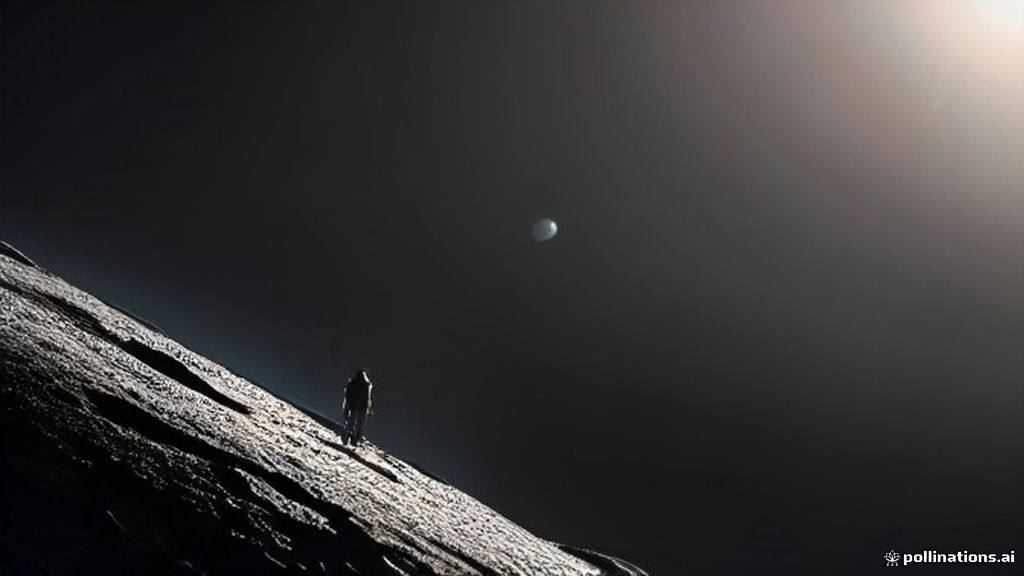
NASA's historic Voyager 1 distance record has officially pushed human exploration into uncharted territory, with the legendary spacecraft crossing the threshold of one full light-day away from Earth. Launched nearly five decades ago in 1977, the veteran probe is currently hurtling through interstellar space at roughly 38,000 miles per hour, now sitting more than 16 billion miles from its home planet. This unprecedented milestone marks the farthest any human-made artifact has ever ventured into the cosmos, cementing the Voyager program as a crowning achievement of American engineering and scientific ambition.
As space enthusiasts and science buffs monitor the update, top trending search queries surrounding the event include Voyager 1 current distance from Earth, NASA interstellar probe live updates, how fast is Voyager 1 traveling, and Golden Record space message status. The sheer magnitude of this achievement has captured public imagination worldwide, drawing widespread interest to the fading signals and historic trajectory of both Voyager 1 and its sister ship, Voyager 2.
Unprecedented Engineering in Interstellar Space
Operating a spacecraft at a distance of one light-day introduces staggering operational challenges for the skeletal team at NASA's Jet Propulsion Laboratory (JPL). Radio signals traveling at the speed of light—186,000 miles per second—now require a full 24 hours to reach the probe, and another 24 hours for flight controllers to receive a response. This 48-hour feedback loop turns routine diagnostics and course corrections into a high-stakes, glacial process where every command must be meticulously calculated.
Despite declining power levels from their aging plutonium-238 radioisotope thermoelectric generators, both spacecraft continue to transmit invaluable scientific data. Voyager 1 is currently operating on just over 210 watts, down significantly from its initial 470 watts at launch, allowing engineers to keep critical magnetometer and plasma wave instruments active while preserving the vital heat needed to keep fuel lines from freezing.
Key Milestones of the Historic Voyager Mission
- Record-Breaking Distance: Voyager 1 has reached one light-day from Earth, or over 16 billion miles, making it the most distant human artifact in history.
- The 1977 Grand Tour: Launched during a rare outer-planet alignment, the twin probes utilized gravitational slingshots to study Jupiter, Saturn, Uranus, and Neptune.
- Interstellar Crossing: Voyager 1 crossed the heliopause into interstellar space in 2012, followed by Voyager 2 in 2018, continuing to measure cosmic rays and magnetic fields.
- The Golden Record: Both spacecraft carry gold-plated phonograph records containing greetings in 55 languages, Earth sounds, music, and images for any future extraterrestrial finders.
- Decaying Power Supplies: Powered by nuclear RTGs, the probes are slowly losing energy but are projected to outlast human civilization, drifting intact through the galaxy for billions of years.
Historical Significance and the Pale Blue Dot
Beyond its instrumental data collection, the Voyager mission holds immense cultural and philosophical weight. In February 1990, Voyager 1 turned its cameras inward for a final time to capture a family portrait of the solar system from 3.7 billion miles away, famously immortalizing Earth as a tiny "pale blue dot" suspended in a sunbeam. Astronomer Carl Sagan's poetic reflection on that image remains a defining touchstone for humanity's perspective on its place in the universe.
Today, only a dedicated 13-member team—including recalled retirees who worked on the mission at its inception—remains responsible for nursing the twin spacecraft through their twilight operational years. Their meticulous management ensures that the data keeps flowing, maximizing the scientific return of a mission whose original design lifespan was vastly exceeded decades ago.
What Happens Next for the Voyager Probes?
As the plutonium power packs continue their inevitable radioactive decay, engineers estimate that the data stream will eventually cease within the next several years when power drops below operational thresholds. However, even when the instruments fall permanently silent, the physical spacecraft will persist. Freed from the sun's gravitational tether in terms of active propulsion, Voyager 1 and Voyager 2 will embark on an eternal galactic journey, drifting through the Milky Way for millions and billions of years as silent monuments to human ingenuity.
Frequently Asked Questions
How long does it take for signals to reach Voyager 1?
Radio signals traveling at the speed of light now take a full 24 hours to reach Voyager 1, and another 24 hours for the telemetry response to travel back to Earth. This creates a 48-hour turnaround time for any communication with the spacecraft.
What is the Golden Record and what is on it?
Both Voyager spacecraft carry a gold-plated copper phonograph record designed as a message to any intelligent extraterrestrial life that might intercept them in the distant future. It contains spoken greetings in 55 languages, natural and mechanical Earth sounds, musical selections ranging from Bach to Chuck Berry, and 115 encoded images of our planet.
How much power do the Voyager probes have left?
Voyager 1's power output has dropped from its initial 470 watts to a little over 210 watts, which is enough to power just two of its scientific instruments. Voyager 2 retains slightly more at roughly 230 watts, powering three instruments as they coast through interstellar space.