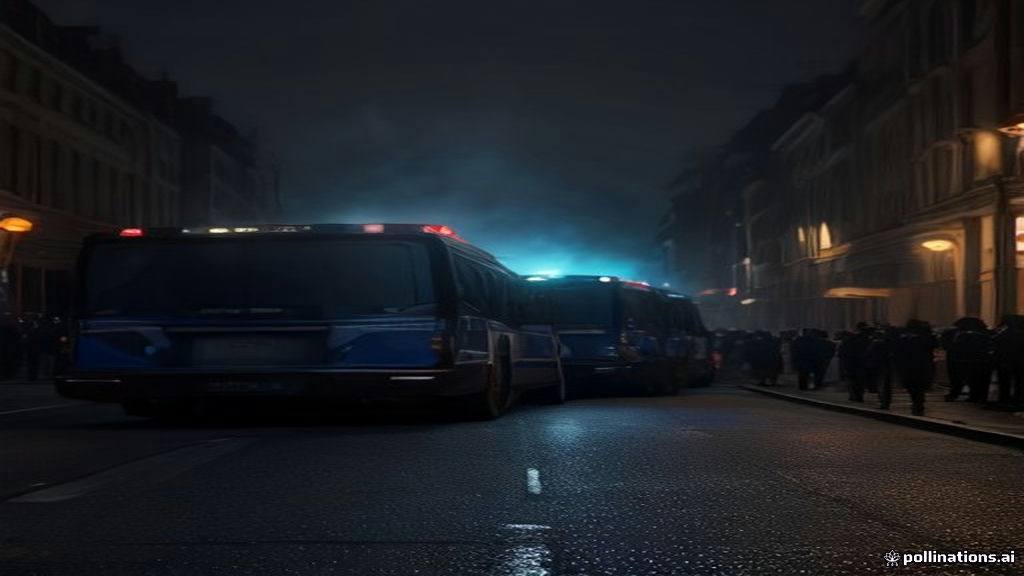
On Saturday, violent Frankfurt riots broke out as thousands of young demonstrators took to the streets to protest rising living costs and the potential return of mandatory military service. The unrest in Germany’s financial hub was part of a coordinated wave of demonstrations across more than 30 cities, organized by the activist group Gen Z regelt (Gen Z takes charge).
While many of the gatherings across Germany remained peaceful, the situation in Frankfurt escalated quickly. Local authorities reported that the city center became a flashpoint for violence, with individuals smashing storefront windows and targeting emergency personnel.
Escalation and Violence in German Cities
The Frankfurt police issued urgent warnings via social media as the demonstrations turned into open conflict. According to official statements, rioters utilized Molotov cocktails against first responders, leading police to urge bystanders to evacuate the downtown area immediately.
In Hamburg, the unrest took a different form as protesters set fire to barricades in the streets. Many local business owners in these major hubs had anticipated the trouble, boarding up windows and doors in the days leading up to the scheduled rallies. Although organizers had anticipated a massive turnout of approximately 182,000 people across Germany, official figures on Saturday afternoon suggested the actual number of participants fell short of those initial expectations.
Key facts regarding the German unrest include:
* Frankfurt: Smashed windows and Molotov cocktails thrown at emergency services.
* Hamburg: Barricades set on fire in the streets.
* Berlin: Largely peaceful demonstrations centered on political demands.
* Organizers: The campaign group Gen Z regelt led the coordination across 30+ cities.
The Demands of Gen Z regelt
At the heart of the movement is a list of grievances focused on the economic and social future of young Europeans. Activists are calling for significant increases in spending for schools, better climate protection measures, and more affordable housing. A primary point of contention is the vocal opposition to any plans that would see a return to mandatory military service.
In Berlin, spokesperson Lina Friedrich summarized the group's stance, emphasizing a desire for structural support rather than state-mandated service.
“We are here today to fight for peace and freedom, rather than for war and coercion,” Friedrich stated during the Saturday rally. She further noted that the movement is prioritizing the health and education systems while seeking a “fairer distribution of the burden” regarding the current economic climate.
Unrest Spreads Across the European Continent
The events in Germany coincide with a broader trend of dissatisfaction across Europe. In France, where rioting had already occurred in previous weeks, the Interior Ministry reported a massive turnout of 320,000 people on Saturday. In Paris, protesters were seen carrying banners expressing uncertainty about their future due to the state's response to their grievances.
Other nations seeing significant activity include:
* Italy: Tens of thousands marched in Rome and other cities. In Milan, the government of Prime Minister Giorgia Meloni announced the deployment of 500 army troops to assist police through the end of the year following previous looting incidents.
* Portugal: In Lisbon, police moved in early Sunday morning to forcibly dismantle a tent camp set up by activists protesting high housing costs. Reports indicate the use of batons and shields to disperse the crowd.
* Serbia: Student-led activism has moved beyond the streets, recently impacting national leadership at the ballot box.
Roman Poseck, the interior minister for the German state of Hesse, which encompasses Frankfurt, had warned against the influence of French protest models. He noted the images of burning houses and police vehicles in France, stating that such a situation "must not be held up as a model" for German activists.
Analyzing the Movement's Impact
Despite the widespread nature of these protests, experts suggest that the outcomes may vary significantly by country. Andrew Barclay, a politics lecturer at the University of Sheffield, pointed out that while the protests share themes—such as the state of education and the Europe cost of living crisis—their scales and specific goals differ.
Barclay noted that the French protests have been larger and more sustained over several weeks. He expressed caution regarding comparisons between the movements in Western Europe and the student-led successes in Serbia, where the focus was primarily on opposing state corruption. According to Barclay, large-scale protests do not always translate into a direct change in national governance.
Frequently Asked Questions
What are the primary reasons for the Frankfurt riots?
Protesters are demonstrating against the rising cost of living, lack of affordable housing, and inadequate funding for education. They are also specifically organized against the possibility of returning to compulsory military service.
How has the Italian government responded to the protests?
In Milan, the government has authorized the deployment of 500 army troops to support police forces until the end of the year. This follows incidents where masked individuals looted stores and attacked officers with projectiles.
Who is organizing the youth protests in Germany?
A campaign group known as Gen Z regelt is responsible for organizing the rallies across more than 30 German cities, including Berlin, Frankfurt, and Hamburg.