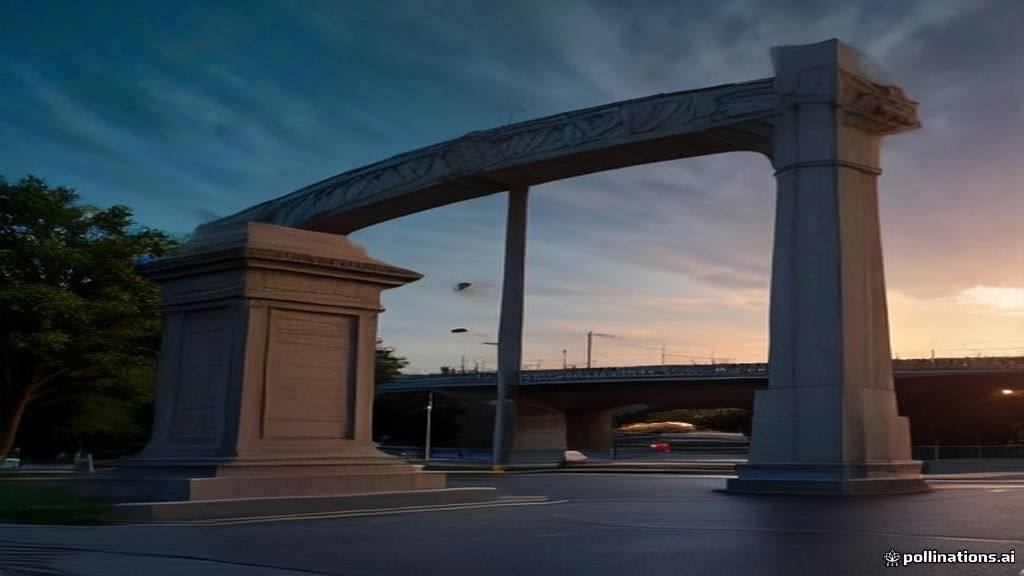
A federal panel has voted to approve President Donald Trump's proposed 250-foot-tall memorial arch on Memorial Circle, setting up a potential legal showdown as a federal judge weighs an emergency injunction. The National Capital Planning Commission delivered an 8-4 vote late in the evening following nearly eight hours of public testimony from veterans, lawmakers, and local residents.
Panel Approves Memorial Arch Amid Intense Backlash
The National Capital Planning Commission voted to greenlight the structure despite receiving widespread pushback during a virtual meeting that drew 131 registered speakers. The proposed monument would stand 250 feet tall on Memorial Circle, a traffic island bridging the Lincoln Memorial and Arlington National Cemetery. Ahead of the commission's decision, protesters gathered at the site where white paint lines had already marked the grass. Government lawyers later noted the markings were applied by a designated construction firm without National Park Service authorization.
During the lengthy public comment session, critics raised concerns regarding construction costs, legality, and potential view obstructions. Many speakers argued the monument would disrespect service members buried at Arlington National Cemetery and complicate regional airspace. Only a few individuals testified in support of the project, including Republican Reps. Andrew Clyde of Georgia and Brian Mast of Florida.
Legal Challenges and Congressional Scrutiny
A group of Vietnam War veterans, an architectural historian, and the Democratic governments of Washington, D.C., and Virginia have filed lawsuits challenging the project. Plaintiffs argue that the arch is unlawful because it lacks authorization from Congress. Judge Tanya Chutkan, presiding over the consolidated cases in the D.C. District Court, directed the government to notify the court immediately following the commission's vote, raising expectations for an 11th-hour preliminary injunction to stop construction.
Key facts surrounding the commission vote and legal opposition include:
- The planning commission voted 8-4 in favor of the arch following a nearly nine-hour meeting.
- Trump-appointed Chair Mark Paoletta and Vice Chair Stuart Levenbach supported moving the project forward quickly.
- D.C. Council Chair Phil Mendelson introduced a motion to postpone the vote, which failed 4-8.
- Virginia Rep. Don Beyer introduced legislation to prohibit and defund the project.
Commissioners Dismiss Violations and Delays
Trump-appointed commissioners brushed aside concerns regarding historic preservation, building height restrictions, and environmental laws. Proponents maintained that Congress authorized the structure back in 1925 when it approved two unbuilt 166-foot columns on Memorial Circle. Supporters also referenced claims that the monument will enhance national security, though officials confirmed no specific national security analysis was included in the final submission.
Historic preservation groups and public advocacy organizations strongly condemned the decision. Brent Leggs, president and CEO of the National Trust for Historic Preservation, called the vote a sham that undermines the democratic process and insults the nation's veterans. Meanwhile, lawmakers warned that companies and officials working on unauthorized projects could face legal risks when a new Congress takes office.
Frequently Asked Questions
Where is the proposed Trump arch supposed to be built?
The arch is planned for Memorial Circle, a traffic island located on the bridge that connects the Lincoln Memorial to Arlington National Cemetery.
How tall would the memorial arch be?
The proposed structure would stand 250 feet tall.
Why are critics and lawsuits trying to block the construction?
Plaintiffs and critics argue that the monument is unlawful because it lacks explicit approval from Congress and violates historic preservation, environmental, and local building height laws.