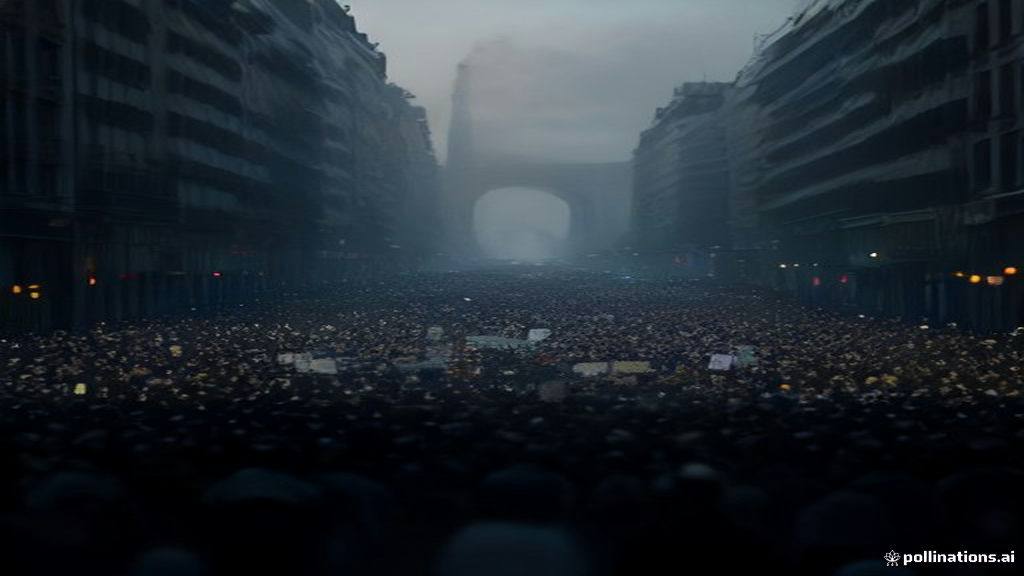
France protests erupt as workers demand economic relief
Tens of thousands of union workers, teachers, transport employees, and government staff across France walked off the job on Thursday to participate in nationwide economic demonstrations. Driven by widespread frustration over low wages and the soaring cost of living, the latest wave of anti-government actions began as nearly 200 peaceful rallies spanning the entire nation and briefly forced the closure of the iconic Eiffel Tower.
Union numbers and official turnout figures
Discrepancies emerged regarding the sheer scale of Thursday's mobilization. According to the General Confederation of Labour (GCL), one of the country's most prominent labor unions, approximately 1.6 million individuals joined the demonstrations. Meanwhile, the French Interior Ministry reported a significantly lower estimate, pegging the total turnout at roughly 600,000 participants.
The demonstrations reflect mounting economic strain among everyday citizens. As Sophie Binet, the head of the GCL, explained regarding the center-stage protests: "Our salaries do not allow us to live anymore." Binet further criticized French President Emmanuel Macron, accusing him of ignoring public grievances and stating, "Because he works for the rich, for the … multinational and for the finance, not for the working people."
Escalating violence and clashes with police
While Thursday's events started peacefully, several areas saw the demonstrations turn violent. Law enforcement deployed tear gas to disperse crowds, while rioters torched a car in the central French city of Lyon and burned various objects on the streets of Paris.
- September origins: Protests originally began in late September among students in Paris angry over school conditions and teacher shortages.
- Public support: Local surveys indicate that nearly six in 10 people in France back the ongoing movement.
- Broader demands: Protesters are calling on the government to scale back military and law enforcement budgets in favor of increased social services funding.
- Political response: Prime Minister Sébastien Lecornu initiated a meeting with labor unions on Monday, though another major protest remains scheduled for the coming Saturday.
Additional political voices have echoed public discontent. Bally Bagayoko, the mayor of the Paris suburb Saint-Denis, criticized the administration, stating that Macron is "incapable of bringing answers" and that citizens are "fed up with having a society that is more and more privileged."
Background on the ongoing unrest
The current movement has evolved significantly since high school and university students first took to the streets in late September to protest infrastructure issues and teacher shortages. Gaining broader backing over time, the unrest has frequently resulted in violent clashes, vandalized small businesses, burned buildings, and thousands of arrests—prompting local authorities to implement curfews in several cities at the height of last month's violence.
Frequently Asked Questions
Who participated in the Thursday demonstrations in France?
Tens of thousands of government workers, teachers, transport employees, and other union workers walked off the job to join the economic protests.
What are the main grievances of the French protesters?
Demonstrators are expressing deep frustration with low wages, the high cost of living, and widening societal inequalities, while calling for reduced military spending and increased funding for social services.
When did these anti-government demonstrations first begin?
The protests originated in late September with high school and university students in Paris before expanding to gain wider national backing from labor unions.